Source Spiral Notebook for School, Gift, and Promotion Needs
Explore 29 options for a spiral notebook tailored for school, gift, and promotion uses. Buyers can compare binding types, cover materials, and customization features from verified suppliers in China.
Key considerations
Products List


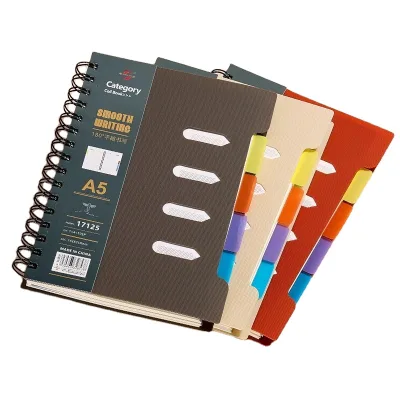

Comprehensive Sourcing Guide
Strategic Sourcing Guide for Spiral Notebook Procurement
Navigating the global market for spiral notebooks requires a disciplined approach that balances technical specifications with supply chain reliability. For procurement professionals, the core keyword "spiral notebook" encompasses a diverse range of products, from simple promotional items to complex organizational planners. The market data indicates a significant variance in product attributes, with observed price points ranging from $0.05 to $14.72 USD and minimum order quantities (MOQ) spanning from 10 to 3,000 units. This guide provides a structured framework for evaluating suppliers, verifying technical claims, and ensuring that the final product meets specific operational and branding requirements without relying on unverified assertions.
Technical Specifications and Binding Architectures
The primary technical differentiator for spiral notebooks lies in the binding method and the structural integrity of the cover. While the term "spiral" often implies a specific coil mechanism, the observed market data reveals a spectrum of binding types, including perfect binding and spiral binding. Buyers must distinguish between these when defining their technical requirements. For instance, some products are described as having a "Thread and Glue" binding way designed to allow the book to lay flat when open, a feature critical for writing ergonomics. Conversely, other listings specify a "Spiral" binding, which offers a different mechanical advantage for page turning and durability.
The cover material is another critical specification that dictates the notebook's lifespan and perceived value. Available options in the current market include hard covers, soft covers, and materials such as PP (polypropylene) or leather. The "Hardcover Spiral Bound Notebook" represents a premium segment often used for corporate gifts or high-end school supplies, whereas "Plastic Spiral Bound Book Printing" suggests a focus on durability and weather resistance, suitable for outdoor use or industrial environments. The paper type also varies significantly; coated paper and art paper are common choices for high-quality offset printing, while the paper weight can range from 120g for A6 formats to 160g for A5 formats. Procurement teams must verify these specific attributes against their intended use case, as a notebook designed for heavy daily writing requires different paper density than one intended for short-term promotional giveaways.
Compliance, Certification, and Safety Standards
In the B2B sector, compliance is not merely a formality but a prerequisite for market access and brand safety. When sourcing notebooks, particularly those intended for school or gift applications, verifying certification status is essential. The available data points to specific certifications such as ISO and EN71. EN71 is a European standard for the safety of toys, which is highly relevant if the notebook is marketed as a school supply or a gift item for children. ISO certification indicates adherence to international management system standards, suggesting a supplier's commitment to quality control processes.
However, buyers must exercise caution. The presence of a certification claim in a product listing does not guarantee that every unit in a specific order will meet these standards. It is the procurement professional's responsibility to request valid, up-to-date certification documents from the supplier before finalizing an order. Furthermore, the "Eco-Friend" feature observed in some listings requires verification. Buyers should ask for specific details regarding the materials used, such as recycled content percentages or biodegradable properties, rather than accepting broad marketing terms. Without concrete evidence, such claims remain unverified observations. Ensuring that the supplier can provide third-party test reports or certificates of conformity is a non-negotiable step in the due diligence process.
Cost Drivers and Pricing Variables
Understanding the cost structure of spiral notebooks is vital for budgeting and negotiation. The observed price range of $0.05 to $14.72 USD reflects a wide disparity in product complexity, material quality, and customization levels. Several key factors drive these costs. First, the cover material plays a significant role; leather and hard covers command higher prices than soft covers or plastic (PP) alternatives. Second, the printing process influences the final cost. Offset printing is listed as a standard method, but the complexity of the design, the number of colors, and the surface finish (such as embossing) can add to the expense.
Customization is another major cost driver. The market data confirms that customization is available for design, color, and size, and that suppliers accept OEM (Original Equipment Manufacturer) orders. However, the extent of customization directly impacts the unit price. A standard notebook with a generic design will be significantly cheaper than one with a fully customized logo, specific paper weight, and unique binding style. Additionally, the MOQ (Minimum Order Quantity) affects the per-unit cost. Orders at the lower end of the observed range (10 units) will likely carry a higher unit price compared to orders near the upper limit (3,000 units). Buyers should analyze their total volume requirements against the supplier's tiered pricing structure to optimize costs without compromising on quality.
Typical Applications and Functional Requirements
The versatility of spiral notebooks allows them to serve a multitude of functions across different industries. The observed usage categories include pocket, gift, promotion, and school applications. For promotional campaigns, the focus is often on branding, with a high emphasis on logo customization and attractive packaging. In this context, the "Function" of the notebook may extend beyond writing to include advertising and gift-giving. The "Plastic Spiral Bound" variants are particularly suited for outdoor promotions or industrial settings where durability is paramount.
In the educational sector, the requirements shift towards functionality and ergonomics. Features such as "Horizontal Line" or "Dotted/Lined/Grid/Blank" inside pages are critical for different types of note-taking. The binding mechanism must allow the notebook to lay flat, facilitating easy writing for students. For corporate use, the notebook may serve as an organizer or planner, requiring specific features like counters (addition, subtraction, reversible) or specific carrying modes. The "Synchronous Counter" function mentioned in the data suggests a specialized application, possibly for inventory or tracking purposes. Procurement teams must align the product specifications with the end-user's workflow to ensure the notebook adds value rather than serving as a disposable item.
Supplier Evaluation and Origin Verification
Selecting the right supplier involves more than just comparing prices; it requires a thorough evaluation of their location, capabilities, and reliability. The market data indicates that suppliers are located in various regions of China, including Guangdong, Shanghai, Ningbo, and Shenzhen. Each of these regions may have different specializations; for example, Guangdong is often a hub for manufacturing and export, while other cities may have specific strengths in paper processing or binding technologies.
When evaluating a supplier, buyers should verify their ability to handle custom orders. The data shows that suppliers accept professional custom orders and can provide samples. This capability is crucial for validating the quality before committing to a large order. The "Sample Provision" attribute indicates that buyers should request physical samples to inspect the binding strength, paper quality, and print fidelity. Additionally, the "Packaging According to Demand" and "Customized Packing" options suggest that suppliers can tailor the logistics solution to the buyer's needs, which is important for protecting the product during transit. Buyers should also assess the supplier's communication responsiveness and their willingness to provide detailed product specifications, as the observed data shows a mix of standard and customized attributes that require clear clarification.
Quality Control and Long-Term Procurement Strategy
Implementing a robust quality control (QC) strategy is essential for mitigating risks in the spiral notebook market. Given the variability in product attributes, such as paper weight and binding types, buyers should establish clear acceptance criteria before production begins. This includes defining acceptable tolerances for dimensions, color matching, and binding integrity. The "Lead Time" observed in the market ranges from 7 to 25 days, which is a critical factor for supply chain planning. Buyers must account for this lead time in their inventory management to avoid stockouts, especially for time-sensitive promotional campaigns.
For long-term procurement, building a relationship with a reliable supplier is key. The ability of a supplier to offer "OEM" services and accept "Customized Logo" orders indicates a capacity for long-term partnership. However, buyers should not rely solely on initial samples; ongoing quality audits and periodic inspections are necessary to ensure consistency. The "Eco-Friend" feature, if a priority for the brand, requires continuous verification of material sources and manufacturing processes. By maintaining a clear record of specifications, certifications, and performance data, procurement teams can ensure that the spiral notebooks continue to meet the evolving needs of their customers and the market.
Conclusion
Sourcing spiral notebooks is a multifaceted process that demands attention to technical details, compliance standards, and supplier capabilities. The market offers a wide array of options, from basic promotional items to high-end organizational planners, with prices and MOQs that vary significantly. By rigorously verifying specifications such as binding types, cover materials, and paper weights, and by ensuring that all certification claims are substantiated, buyers can make informed decisions. The observed data highlights the importance of customization and the need for clear communication with suppliers regarding packaging and delivery timelines. Ultimately, a successful procurement strategy relies on a balanced approach that prioritizes quality, compliance, and long-term value over short-term cost savings alone.
FAQs
What binding types are available for spiral notebooks?
Spiral binding and perfect binding are available options for these notebooks. Some products also feature thread and glue binding designed to lay flat when open, offering different ergonomic advantages for writing tasks.
Can I customize the logo and design on the notebook?
Yes, customization is available for design, color, size, and logos. Suppliers accept professional custom orders and OEM requests, allowing buyers to tailor the product to specific branding or promotional needs.
What certifications do spiral notebook suppliers typically hold?
Some suppliers hold ISO and EN71 certifications for safety and quality management. EN71 is particularly relevant for school or gift applications, but buyers should verify valid documents before finalizing orders.
How long does it take to receive a custom order?
The delivery date typically ranges from 7 to 25 days depending on the order specifics. This lead time must be factored into inventory planning, especially for time-sensitive promotional campaigns or school supplies.
What is the price range for spiral notebooks?
Prices observed in the market range from 0.05 to 14.72 USD per unit. The final cost depends heavily on material quality, customization levels, and the minimum order quantity selected by the buyer.
Which paper types are used for notebook printing?
Common paper types include coated paper and art paper for high-quality offset printing. Specific weights like 160g for A5 or 120g for A6 formats are available to suit different writing and durability requirements.
Where are the manufacturers of these notebooks located?
Manufacturers are located in various regions of China, including Guangdong, Shanghai, Ningbo, and Shenzhen. Buyers should verify the specific origin to understand logistics capabilities and potential regional specializations.
What are the minimum order quantities for these products?
Minimum order quantities range from 10 to 3000 units depending on the supplier and product type. Lower MOQs may result in higher unit prices, while larger orders often benefit from tiered pricing structures.